YouTube New Monetization Policy 2027: What Creators Need to Know
Quick Read Summary
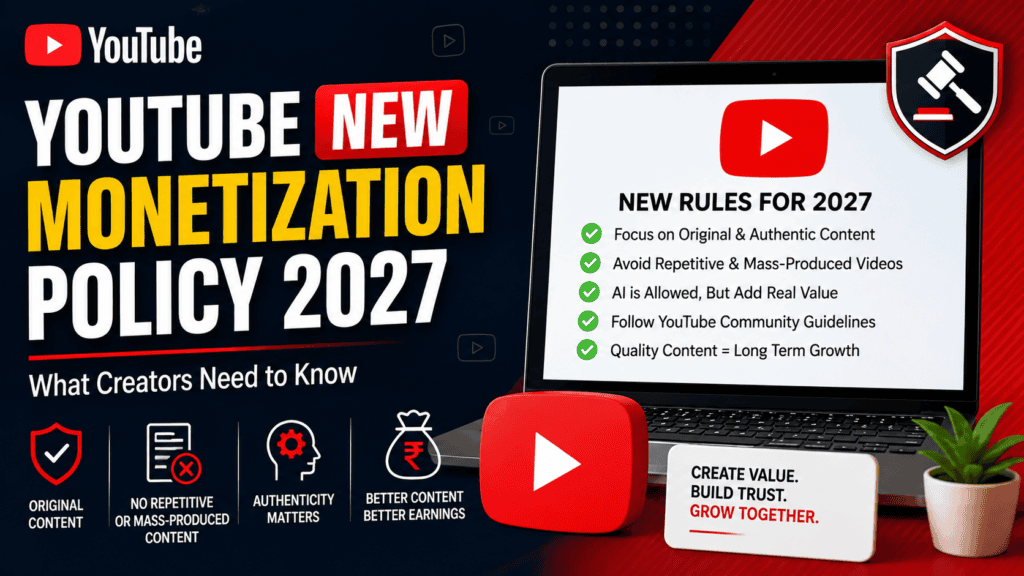
YouTube monetization is focusing more on original and valuable content. The important point for creators is to avoid repetitive, mass-produced or low-value videos.
- Original content matters: Create your own ideas, explanations and experiences.
- Avoid repetitive content: Videos made using the same template with very little change may face monetization issues.
- AI is not automatically banned: AI can be used as a tool, but the content should still provide real value and originality.
- Reused content needs value: Adding meaningful commentary, education, modification or entertainment can make reused content more valuable.
- Focus on quality: Instead of uploading many similar videos, create useful content for your audience.
- For 2027: Creators should focus on authenticity, quality and long-term audience trust.
Table of Contents
Introduction
YouTube is one of themost popular platforms for creating and sharing videos. Many creators in India use YouTube to share knowledge, entertainment, tutorials, reviews and Shorts. For many creators, YouTube is also a way to earn money through monetization.
But now, content quality is becoming more important. YouTube has clarified its monetization rules around repetitive and mass-produced content. The policy update made in July 2025 renamed “repetitious content” as “inauthentic content” and clarified that repetitive or mass-produced content is not eligible for monetization.
So, if you are planning your YouTube channel for 2027, you should understand these rules properly.
Important: YouTube’s official information currently describes the July 2025 update. It does not announce a separate “new 2027 monetization policy.” So, this blog explains the rules creators should understand while preparing for 2027.
What is YouTube Monetization?
YouTube monetization means earning money from your YouTube content when your channel is eligible for the YouTube Partner Program.
Creators can make content such as:
- Educational videos
- Tutorials
- Vlogs
- Reviews
- Original Shorts
- Entertainment videos
- Original music and videos
YouTube says monetized videos and Shorts should be original and non-repetitious, along with meeting other monetization requirements.
What is the New YouTube Monetization Policy?
The major clarification is about inauthentic content.
Earlier, YouTube used the term “repetitious content.” In July 2025, YouTube renamed it “inauthentic content” to make it clearer that repetitive and mass-produced content is not suitable for monetization. YouTube also said this type of content was already not eligible under its existing rules.
The main idea is simple:
YouTube wants creators to make original, authentic and useful content instead of producing many similar videos only for getting views.
What is Inauthentic Content?
Inauthentic content means content that looks mass-produced, repetitive or made using the same template again and again with very little difference.
For example, suppose a creator uploads 50 videos where:
- The same template is used every time
- The same type of script is repeated
- Only a few words are changed
- There is very little original information
- Videos are produced mainly to get views
This type of content can create monetization problems.
YouTube says content should provide something interesting, educational, creative or useful to viewers.
Does YouTube Ban AI Content?
No. AI content is not automatically banned from monetization.
This is an important point for creators planning their 2027 YouTube strategy.
YouTube has said that creators can use AI tools to improve storytelling and content creation. However, the final content still needs to follow YouTube’s monetization policies.
The problem is not simply using AI.
The problem can come when AI or automation is used to create large amounts of similar, low-value content with little original input.
For example, using AI to help generate ideas or improve a script can be different from automatically producing hundreds of nearly identical videos.
What About Reused Content?
Reused content is another important part of YouTube monetization.
If you take somebody else’s video, clip or content and make only small changes, it may not qualify for monetization.
However, YouTube says there has been no change to its reused-content policy in the July 2025 update. Commentary, reactions, clips and compilations can still be monetized when they add significant original commentary, modification, educational value or entertainment value.
So, simply downloading someone else’s content and uploading it again is not a good YouTube strategy.
What Type of Content Can Be Monetized?
YouTube wants content that gives viewers a reason to watch.
Some examples include:
- Your own tutorials
- Educational videos
- Personal vlogs
- Original reviews
- Original storytelling
- Original Shorts
- Videos with your own commentary and explanation
- Content where every video has a different topic, story or purpose
YouTube explains that similar formats can still be monetized when the main substance of each video is different and provides value to viewers.
For example, a creator can make 100 videos about digital marketing. Using a similar intro or outro is not automatically a problem. The important thing is that each video should have different and useful information.
What Should Indian YouTubers Do in 2027?
If you are a new or existing YouTube creator in India, focus on quality instead of quantity.
Here are some simple tips:
1. Create Your Own Content
Try to add your own ideas, experience, explanation and opinion to your videos.
2. Avoid Copy-Paste Videos
Do not depend on content copied from other creators or websites. Add your own value when using outside material.
3. Do Not Make Hundreds of Similar Videos
Uploading many videos with the same template and only small changes can create monetization problems.
4. Use AI Carefully
AI can help with ideas, research, scripts and editing, but your final video should have genuine value and originality.
5. Focus on Your Audience
Ask yourself one simple question:
“What will my viewer learn or get from this video?”
If the answer is clear, your content has a better purpose.
6. Make Every Video Different
Even if you work in one niche, give every video a different topic, explanation, example or story.
Will YouTube Monetization Become Harder in 2027?
Creators should not assume that YouTube has announced a completely new 2027 monetization policy.
However, the direction of YouTube’s existing rules is clear: original and authentic content is important, while mass-produced, repetitive and low-value content can create monetization problems.
This means creators should not build their entire channel around shortcuts.
If you are starting a YouTube channel today, it is better to build a long-term audience rather than simply trying to upload as many videos as possible.
Conclusion
YouTube monetization is changing with the way online content is changing.
The important lesson for 2027 is simple: create original content, provide value and avoid repetitive or mass-produced videos.
AI can be a useful tool, but it should not replace your creativity and original ideas. Similarly, using a similar video format is not automatically a problem when every video provides different and useful content.
If you want to become a YouTube creator, start learning the right digital skills and understand how online platforms work.
CTA
Want to learn useful digital skills for your career?
Vidya Sarthi can help you explore learning opportunities and build skills for the digital world. Start learning, improve your knowledge and take the next step toward your career goals.
Start your learning journey with Vidya Sarthi today!